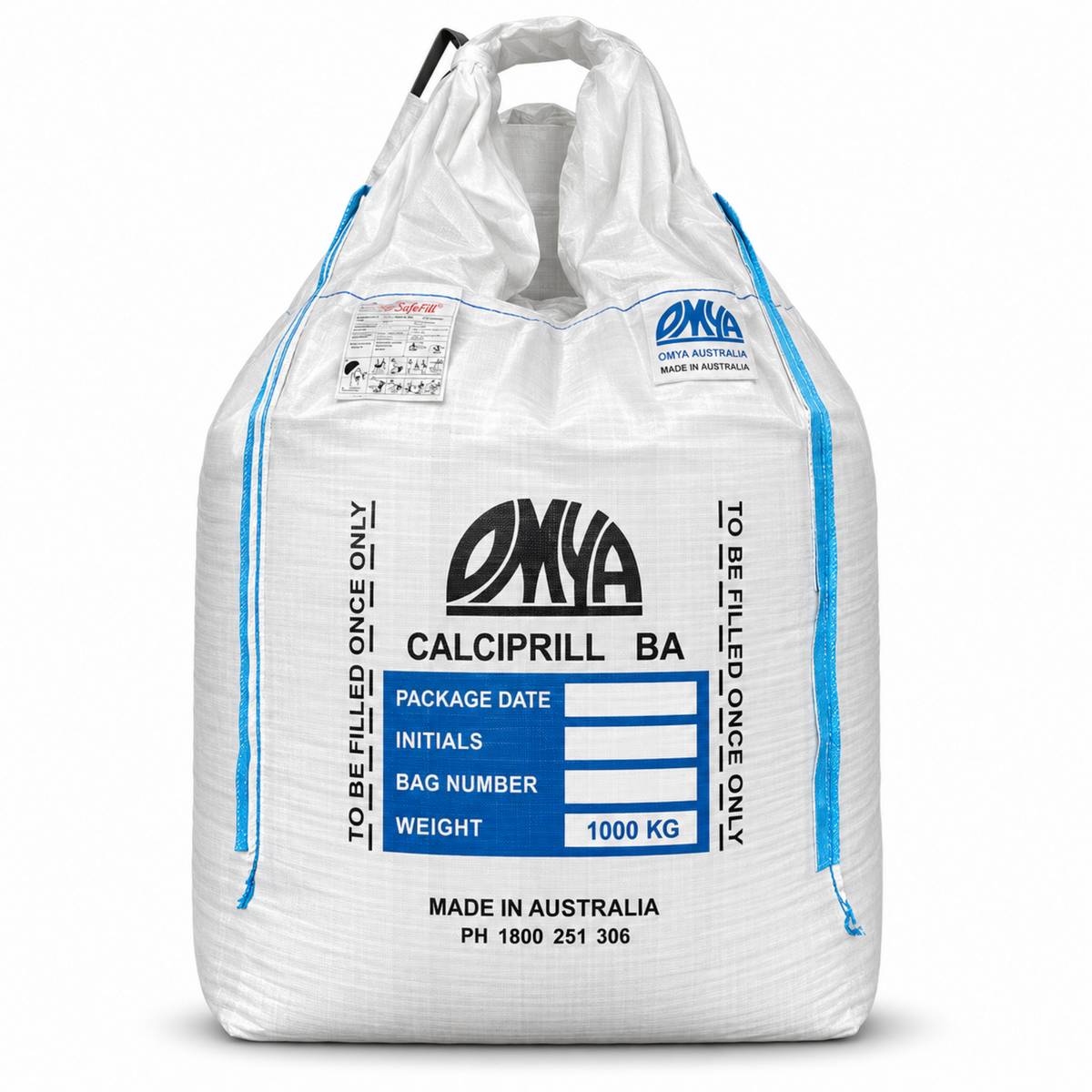
Omya Calciprill is a granulated lime made in Bathurst, NSW from ultra-fine particles of 100% natural calcium carbonate. The 2 to 6 mm granules are dust free and spread evenly through a standard fertiliser spreader, making it easy to apply to lawns, turf, pasture and crops.
Acid soils lock up nutrients, damage soil structure and slow root growth. Because Calciprill is made from ultra-fine particles, it breaks down quickly once moist and corrects soil pH faster than coarse agricultural lime. It also supplies calcium, which plants need for strong roots and healthy new growth, and helps them make better use of your NPK fertilisers.
Regular light applications of Calciprill keep soil pH in the optimal range and replace the calcium removed by growing plants. It can be applied at any time of year, on its own or with other fertilisers, and is certified for use in organic systems. A soil test is the best way to confirm your soil pH and the right rate. Available in 20kg bags for delivery, or 500kg and 1000kg bulk bags for pickup from our Mount Barker store.
Omya Calciprill is a granulated calcium carbonate lime made from ultra-fine particles of 100% natural calcium carbonate, formed into 2 to 6 mm dust-free granules. It is used to correct soil acidity and supply calcium to lawns, turf, pasture and crops.
The ultra-fine particles are highly reactive, breaking down quickly in moisture to raise soil pH and reduce aluminium toxicity in acid soils. Correcting pH improves the availability of nutrients already in the soil and helps plants make better use of applied NPK fertilisers.
Calciprill can be top dressed at any time of year with a standard spreader, on its own or with other fertilisers, or drilled with seed at sowing. Regular low-rate applications maintain optimal pH more effectively than large, infrequent applications of bulk lime. Certified for organic farming under the National Standard and AS 6000.
| Nutrient | Symbol | Typical Analysis |
|---|---|---|
| Calcium | Ca | 36% |
| Magnesium | Mg | 1% |
| Calcium carbonate | CaCO3 | 90.3% |
| Magnesium carbonate | MgCO3 | 3.3% |
| Neutralising value | NV | 95 |
| Granule size | - | 2-6 mm |
Hills Farm Supplies provides pasture seed products based on general suitability for Australian conditions.
However, we do not guarantee animal performance or health outcomes resulting from the use of these products.
Freight & Delivery Responsibility
Once goods have been dispatched from Hills Farm Supplies, they are carried at the purchaser’s risk.
While we take care to ensure all orders leave in good condition:
We are not liable for loss, damage, or delays caused during transit
Any claims relating to freight must be made with the carrier
Transit insurance is available upon request and is recommended for higher value orders.
What is Calciprill used for?
It corrects acidic soils and supplies calcium to lawns, turf, pasture and crops, helping plants access nutrients and grow stronger roots.
How is Calciprill different from normal lime?
Calciprill is made from ultra-fine calcium carbonate formed into granules, so it reacts faster than coarse lime, spreads evenly through a standard spreader and does not create dust.
How much Calciprill should I apply?
It depends on your soil type and pH. As a guide, Omya recommends top dressing about 30 g per square metre on sandy soils, 50 g on loams and 62.5 g on clays to raise pH by around 0.5. A soil test is the best way to confirm the right rate.
When can I apply Calciprill?
Any time of year. Water it in or apply before rain so the granules break down into the soil. It can be spread on its own or with other fertilisers.
Should I use Calciprill or gypsum?
Use Calciprill when your soil is acidic and needs its pH raised. Use gypsum to improve the structure of heavy or sodic clay soils without changing pH. A soil test will show which your soil needs, and some soils benefit from both.
Omya Calciprill
Get it today with payments as low as $6.62 with

Same day dispatch
Orders placed before 3pm
Same day dispatch
Orders placed before 3pm
Available
Buying in Bulk?
Save big with bulk discounts! We help farmers of all sizes get equipped with the gear they need to succeed.
- Australian owned and operated
- Australia’s Largest Range Of Stock
- Buy Now, Pay Later with Afterpay
- Online Competitive Pricing Only
Trending Products


Omya Calciprill is a granulated lime made in Bathurst, NSW from ultra-fine particles of 100% natural calcium carbonate. The 2 to 6 mm granules are dust free and spread evenly through a standard fertiliser spreader, making it easy to apply to lawns, turf, pasture and crops.
Acid soils lock up nutrients, damage soil structure and slow root growth. Because Calciprill is made from ultra-fine particles, it breaks down quickly once moist and corrects soil pH faster than coarse agricultural lime. It also supplies calcium, which plants need for strong roots and healthy new growth, and helps them make better use of your NPK fertilisers.
Regular light applications of Calciprill keep soil pH in the optimal range and replace the calcium removed by growing plants. It can be applied at any time of year, on its own or with other fertilisers, and is certified for use in organic systems. A soil test is the best way to confirm your soil pH and the right rate. Available in 20kg bags for delivery, or 500kg and 1000kg bulk bags for pickup from our Mount Barker store.
Omya Calciprill is a granulated calcium carbonate lime made from ultra-fine particles of 100% natural calcium carbonate, formed into 2 to 6 mm dust-free granules. It is used to correct soil acidity and supply calcium to lawns, turf, pasture and crops.
The ultra-fine particles are highly reactive, breaking down quickly in moisture to raise soil pH and reduce aluminium toxicity in acid soils. Correcting pH improves the availability of nutrients already in the soil and helps plants make better use of applied NPK fertilisers.
Calciprill can be top dressed at any time of year with a standard spreader, on its own or with other fertilisers, or drilled with seed at sowing. Regular low-rate applications maintain optimal pH more effectively than large, infrequent applications of bulk lime. Certified for organic farming under the National Standard and AS 6000.
| Nutrient | Symbol | Typical Analysis |
|---|---|---|
| Calcium | Ca | 36% |
| Magnesium | Mg | 1% |
| Calcium carbonate | CaCO3 | 90.3% |
| Magnesium carbonate | MgCO3 | 3.3% |
| Neutralising value | NV | 95 |
| Granule size | - | 2-6 mm |
Hills Farm Supplies provides pasture seed products based on general suitability for Australian conditions.
However, we do not guarantee animal performance or health outcomes resulting from the use of these products.
Freight & Delivery Responsibility
Once goods have been dispatched from Hills Farm Supplies, they are carried at the purchaser’s risk.
While we take care to ensure all orders leave in good condition:
We are not liable for loss, damage, or delays caused during transit
Any claims relating to freight must be made with the carrier
Transit insurance is available upon request and is recommended for higher value orders.
What is Calciprill used for?
It corrects acidic soils and supplies calcium to lawns, turf, pasture and crops, helping plants access nutrients and grow stronger roots.
How is Calciprill different from normal lime?
Calciprill is made from ultra-fine calcium carbonate formed into granules, so it reacts faster than coarse lime, spreads evenly through a standard spreader and does not create dust.
How much Calciprill should I apply?
It depends on your soil type and pH. As a guide, Omya recommends top dressing about 30 g per square metre on sandy soils, 50 g on loams and 62.5 g on clays to raise pH by around 0.5. A soil test is the best way to confirm the right rate.
When can I apply Calciprill?
Any time of year. Water it in or apply before rain so the granules break down into the soil. It can be spread on its own or with other fertilisers.
Should I use Calciprill or gypsum?
Use Calciprill when your soil is acidic and needs its pH raised. Use gypsum to improve the structure of heavy or sodic clay soils without changing pH. A soil test will show which your soil needs, and some soils benefit from both.